Key Takeaways
- Decision latency does not end with better planning. It ends where planning and execution are genuinely connected. APS closes the first gap; Logility’s Orchestration Center closes the next by processing signals from all domains in real time.
- Orchestration Center is an active orchestration layer, not a dashboard. It processes signals from supply chain planning, manufacturing operations, quality, and execution simultaneously, identifying conflicts and initiating structured responses automatically.
- Agentic AI is an integral part of the platform, not an add-on. AI agents monitor processes across all domains autonomously, assess the impact of disruptions on dependent orders, and act before a human could notice the signal.
- The connection to manufacturing operations is a key differentiator. Production feedback, machine downtime, maintenance scheduling, and quality holds flow directly into the orchestration layer and influence planning prioritization in real time.
- Automation in planning is a maturity curve, not a switch. From interactive planning to pre-built algorithms to AI-supported autonomous runs, the transitions are a gradual steps on the same platform, without system breaks.
- The results are measurable. Companies report significantly reduced response times for planning exceptions, fewer manual escalations, and greater cross-domain transparency. The economic impact is quantifiable from day one.
Decision Intelligence 2026: How Logility Connects Planning and Execution on a Unified Platform
Decision latency is the central productivity challenge facing modern manufacturing companies. Advanced Planning and Scheduling (APS) closes the gap between theoretical enterprise resource planning (ERP) plans and executable production schedules. Logility’s Orchestration Center takes that a step further, connecting planning, production, quality, and execution in a shared orchestration layer where autonomous agents identify, assess, and resolve conflicts before human intervention is required. The goal is to establish “Decision Intelligence”—that is, the capability to make fast and optimal decisions in a complex, dynamic production environment.
The Starting Point: APS as the Foundation
Traditional ERP planning produces theoretically correct but operationally inexecutable plans. APS closes this gap by planning materials and resources simultaneously, based on real constraints, and in real time, so that decision latency in detailed scheduling is structurally reduced.
That said, reduced decision latency does not directly result in better production plans. It genuinely connects planning and execution, so that what happens on the shop floor flows back into planning immediately, and where systems do not merely capture data but act on it in real time.
APS is a prerequisite for that flow, so companies without a robust planning foundation cannot take the next steps. Those that do have an APS solution are today standing at the threshold of a new level of possibility.
End-to-End Planning: Rough-Cut and Detailed Planning in One Model
The first step beyond traditional APS is connecting strategic and operational planning in a shared data model. Sales planning, inventory management, procurement, and production planning no longer run in isolation. They’re viewed within a continuous, unified model.
What this means in practice is that a shift in demand becomes visible in schedules immediately. A material shortage in procurement directly influences prioritization on the shop floor. Strategic decisions—like whether to add a new product line, whether a plant receives additional capacity, or whether a supplier is changed—can be evaluated directly against operational constraints.
Silos between planning levels generate latency. Every handover between separate systems, every manual consolidation of data, and every reconciliation between different planning horizons costs time. A shared data model eliminates these handovers, not through simplification, but through integration.
The goal is not faster planning. It is planning that does not lose time reconciling its own levels.
Strategic Simulation: Evaluating Decisions Before They Are Made
Investments in additional capacity, new shift models, and revised production distribution across sites can come with significant consequences for inventory levels, lead times, delivery capability, and cost structure. Traditionally, they are made on the basis of experience and one-off analyses.
Modern planning systems offer something different. Scenarios can be created, compared, and evaluated on the basis of the same data model driving operational planning. What happens if Plant A adds a shift? How does on-time delivery change if production of Product B is moved to Plant C? What effect does adding an additional supplier have on inventory levels in the next quarter?
These questions can be worked through quantitatively before a decision is made, not just discussed qualitatively. Strategic simulation becomes part of the ongoing planning process—not a one-off project carried out by external consultants, but a tool that leadership uses regularly.
Variable Degree of Automation: From Interactive to Autonomous
Automation in planning is not a binary concept. It’s not a simple choice between manual intervention and fully automated planning. Modern systems support a variable degree of automation that adapts to the maturity of the organization, the complexity of the situation, and the requirements of the planners.
On the interactive side, planners use the system to analyze scenarios, adjust priorities, and make decisions. The system supports while the human steers. On the automation side, planning runs are executed regularly in the background, schedules are updated, and scenarios are calculated without any manual intervention from a planner.
Between these two extremes lies a broad spectrum. There are pre-built algorithms for capacity balancing and sequence optimization, configurable by key users without software development, as well as planning profiles for different situations, such as supply chain disruptions, capacity bottlenecks, or stable production phases.
The first stage of automation is the software directly handling recurring, repetitive planning tasks The next stage goes further. Artificial intelligence (AI) does not just take over routine tasks, but recognizes patterns, anticipates bottlenecks, and initiates responses autonomously. The transition from automating planning runs to AI-supported, autonomous agents is a step toward maturity taken on the same platform.
The goal is not to replace planners. It is to direct their time toward where their judgment creates the most value: evaluating complex trade-offs and making strategic decisions.
The Logility Orchestration Center: Decision Intelligence as a Platform Capability
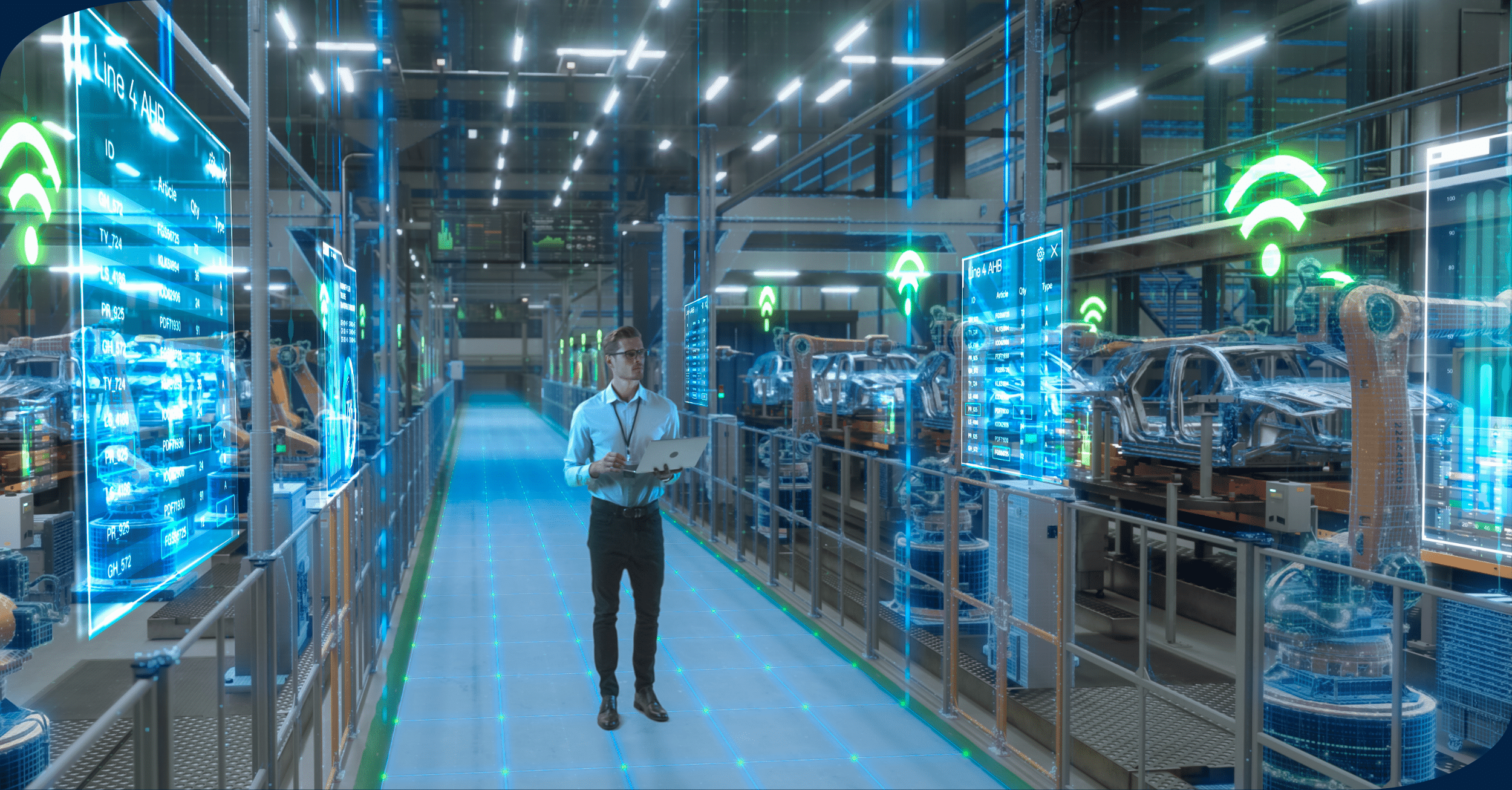
End-to-end APS and variable automation deliver their full value only when information from all planning and execution domains is not just made visible, but actively processed. That’s why Orchestration Center is not simply a visualization layer that facilitates side-by-side data comparisons. It’s an active orchestration layer that processes signals from supply chain planning, manufacturing operations, supply chain execution, quality management, and production in real time to identify conflicts and initiate structured responses.
This connection to the rest of your organization’s operations is one of the central strengths of the Logility platform. Feedback from production; downtime notifications from machines and equipment; and planned or unplanned maintenance activities flow directly into the orchestration layer. So an unplanned machine failure is not visible only in the next planning cycle; it’s recognized immediately, its impact on dependent orders is assessed, and the scheduling of maintenance activities is initiated. Quality data, such as material holds or rework requirements, likewise become visible in the planning context immediately and influence prioritization in real time.
Agentic AI is not an optional add-on module in this context. It is an integral component of the platform. AI agents monitor production processes, planning states, and supply chain signals autonomously across all domains. They identify conflicts, assess their impact on dependent processes, and initiate structured responses without waiting for a human to notice the signal.
Generative AI changes the way planners and leadership can interact with the system. Instead of navigating reports and consolidating data from multiple sources, they can ask targeted questions: “Why is delivery date X at risk? Which orders are most critical? What are the options if Supplier Y fails?” Answers are provided in natural language, based on consolidated real-time data from all connected domains.
The technology also enables cross-functional responses. When an AI agent identifies a conflict, there’s no informal coordination process over messaging tools or email. Instead, a structured, traceable sequence follows. The right information reaches the right person, the right decision is documented, and the right action is executed.
What distinguishes Orchestration Center from isolated planning or execution tools is domain depth. Many platforms connect planning levels, whereas Logility connects planning levels with production realities. Machine availability, quality status, maintenance requirements, and supply chain signals flow into the same orchestration layer and are evaluated together. This is the foundation of Decision Intelligence—not just faster planning, but better decisions given that all relevant information is available at the moment a decision needs to be made.
The value of this platform architecture is already measurable. Companies using Orchestration Center in production report significantly reduced response times for planning exceptions, a noticeable reduction in manual escalation processes, and substantially greater transparency across domain boundaries.
Decision Intelligence does not mean automating decisions. It means enabling people to make faster and better-informed decisions than was ever possible with traditional planning tools in a complex, dynamic production environment.
The human in the loop remains central throughout. Agentic AI and automat4ed workflows do not replace human decisions. They ensure that people have the right information at the right moment to decide faster and with greater confidence.
Why Now Is the Right Time To Move Forward
Decision latency is the result of structural limitations. It arises when systems exist alongside each other without communicating; when planning and execution operate on different information; and when disruptions on the shop floor only reach planning after the damage has already been done.
APS closes the first gap, that between theoretically correct and operationally executable plans. The Orchestration Center closes the next, which is the gap between what is planned and what actually happens. Together, the two solutions create a planning architecture no longer dependent on experience and manual handovers, but on structured, automated, and real-time connected control.
The economic impact is measurable. Even a fractional improvement of a few tenths of a percentage point in overall efficiency can translate to several hundred thousand euros annually at a production revenue of 500 million euros. This is in addition to reduced variable production costs through error prevention and reduced planner hours spent on manual reporting processes.
Companies that have APS as part of their foundation can take this next step without replacing core systems. The technology is available, the platform is live in production, and the results are documented. Decision Intelligence is therefore not a strategic goal for the day after tomorrow. It’s the next actionable step for companies ready to stop accepting decision latency as inevitable.
Those who have taken the first step today can take the second one now.
Learn how the Manufacturing Workbench and Logility Platform bring APS, agentic AI, and real-time orchestration together into an integrated solution for Decision Intelligence.
If you’re ready to learn more about our APS software and what it can do for your business, feel free to contact us or request your personalized demo.